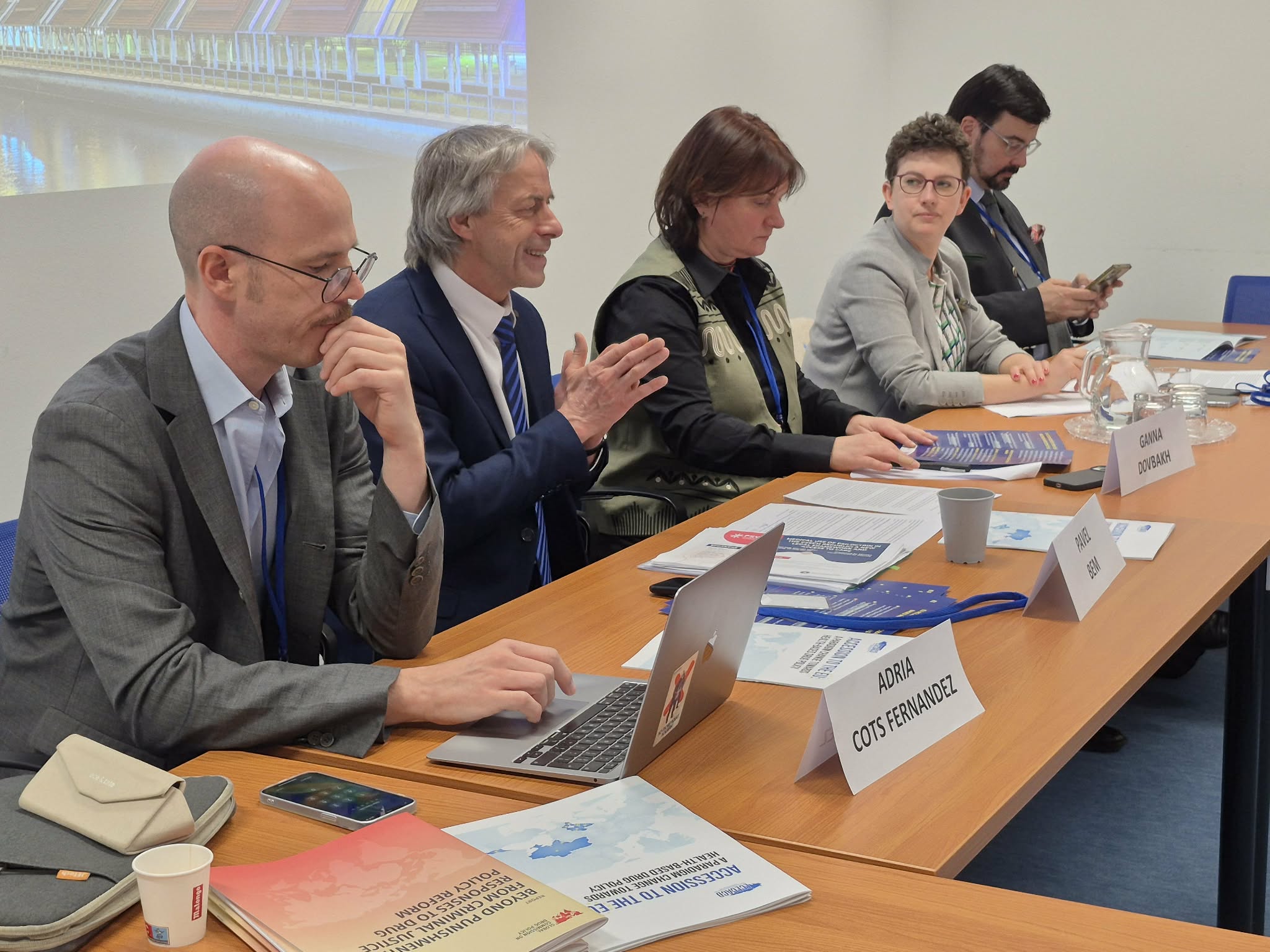
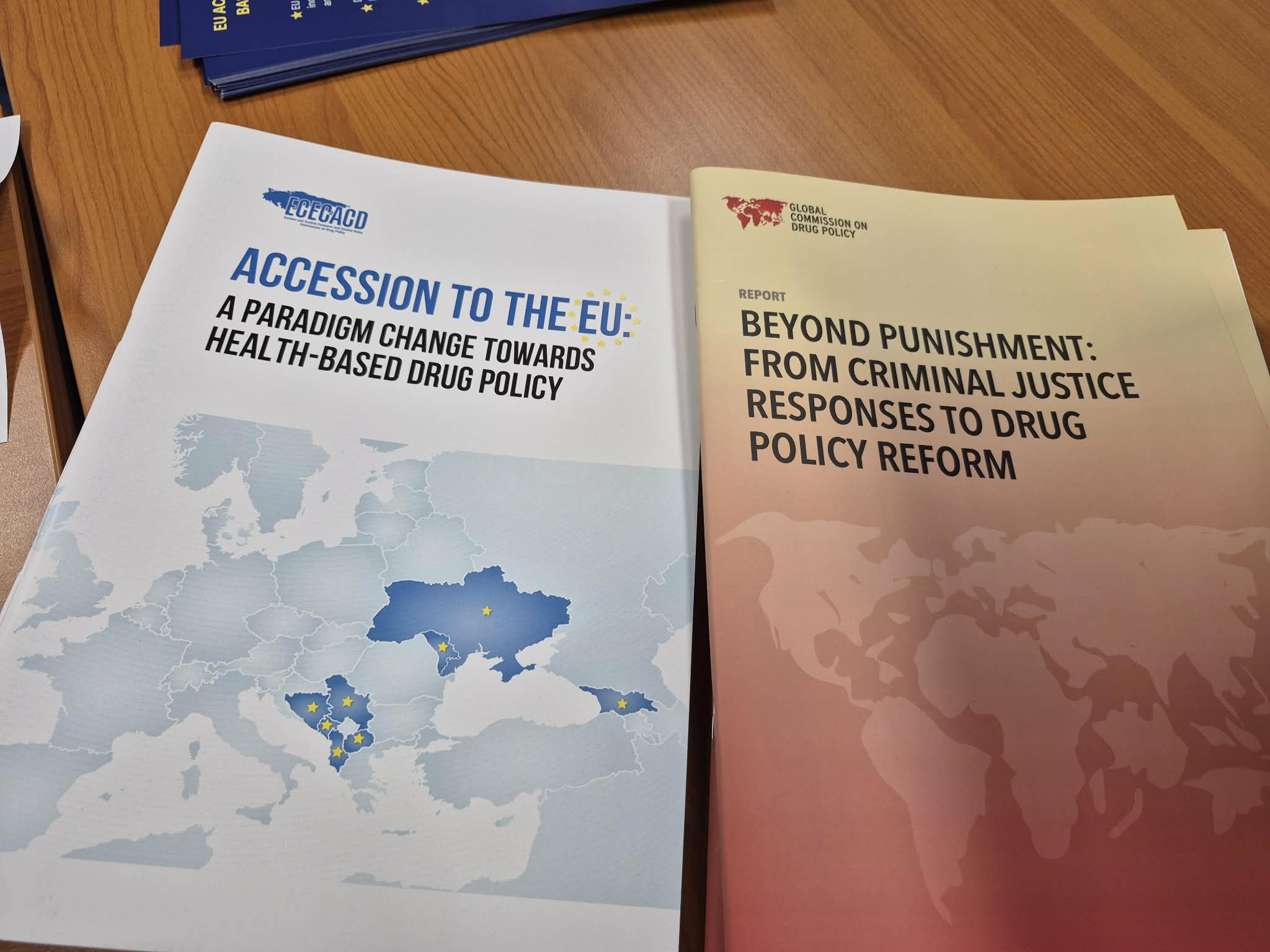
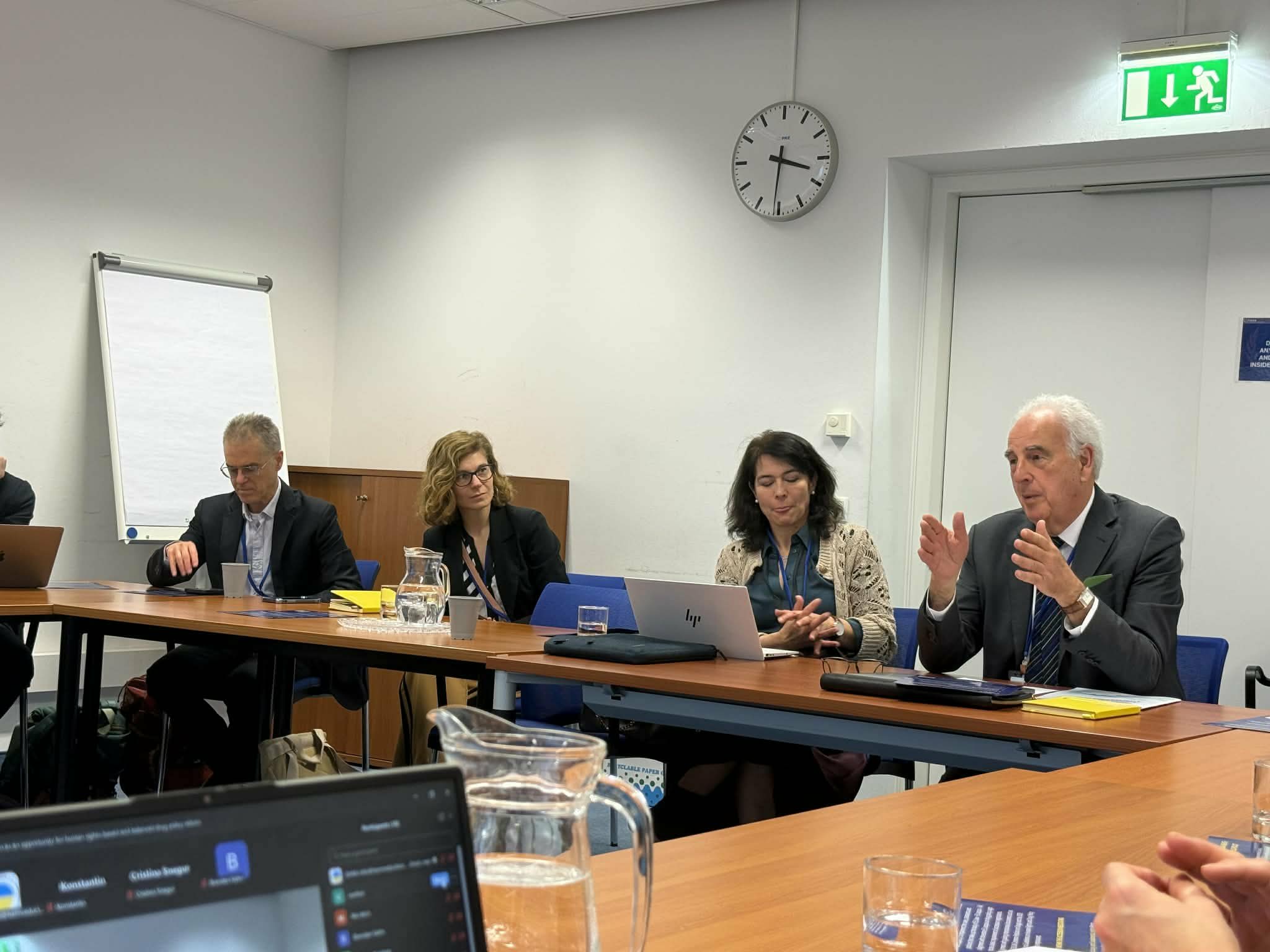
Eastern and Central European and Central Asian Commission on Drug Policy (ECECACD) co-organised the CND69 side event “EU accession as an opportunity for human rights-based and balanced drug policy reform” on 11 March 2026 bringing together interested stakeholders, EU institutions, UN agencies, governments, experts and civil society.
Discussion was focused on how EU enlargement can drive evidence-based, health- and rights‑oriented drug policy in Ukraine, Georgia, Moldova and the Western Balkans.
Pavel Bém, Commissioner of the of the ECECACD facilitated event. Professor Michel Kazatchkine (ECECACD) focused on EU accession as a catalyst for shifting away from punitive control models towards public health‑oriented, human rights‑based approaches.
Marie‑Aude Tannou from the European Commission contributed the EU institutional perspective on drug policy alignment in the context of enlargement and underscored the importance of integrating public health and human rights considerations into accession-related reforms. Speaking on behalf of Cyprus in its role as current Cyprus Presidency of the Council of the European Union, Josefina Mavrou stressed the importance of keeping health and human rights at the core of the EU enlargement agenda. Ganna Dovbakh (EHRA) highlighted the central role of civil society in monitoring reforms, producing shadow reports and safeguarding accountability. Boyan Konstantinov (UNDP) suggested next steps for advocacy in candidate countries.
The discussion underscored broad agreement that EU accession processes can and should be used proactively to embed harm reduction, decriminalisation and community‑led services within national drug policies in candidate countries. Participants called for sustained dialogue between EU institutions, national authorities and civil society, including involvement of people who use drugs, to ensure that technical alignment with EU standards goes hand in hand with concrete investments in services and the dismantling of harmful punitive practices.